Why Sportsbooks Love When You Bet Parlays (And What Sharps Do Instead)
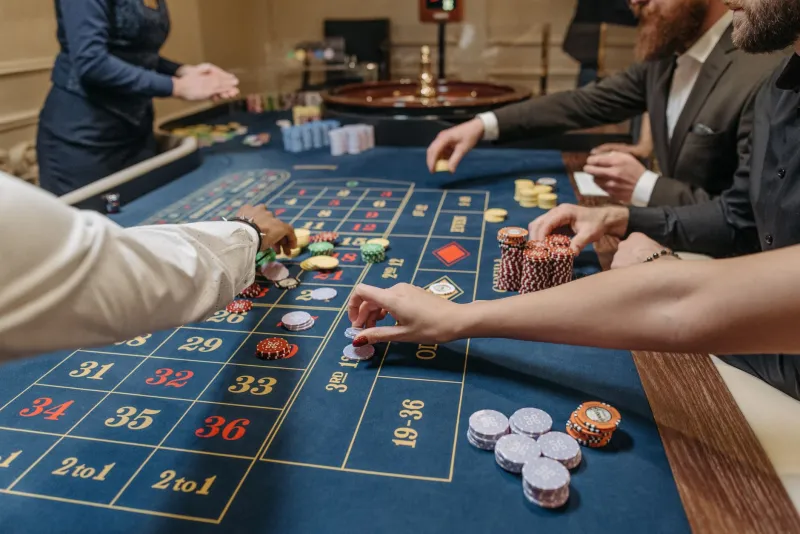
Walk into any sportsbook in Vegas, pull up DraftKings on your phone, or scroll through FanDuel on a Sunday morning, and you'll notice something immediately: parlays are everywhere. Same-game parlays. Parlay insurance promos. Boosted parlay odds. The house is practically begging you to combine your bets.
There's a reason for that. And it has nothing to do with generosity.
Understanding the structural disadvantage baked into parlay betting isn't about being a buzzkill — it's about making smarter decisions with your money. Because once you see the math clearly, you can't unsee it.
The Dream vs. The Reality
Here's the scenario most casual bettors know well. It's Sunday. You've got four games you feel good about. Instead of betting each one separately, you throw them all into a parlay for a shot at a $600 return on a $25 bet. The ticket looks beautiful. The potential feels real.
And that's exactly the psychological hook.
Human beings are wired to overvalue low-probability, high-reward outcomes. It's the same cognitive quirk that drives lottery ticket sales despite a return rate below 50 cents on the dollar. We mentally anchor to the big number — $600! — rather than doing the math on how often that ticket actually hits.
Let's do that math now.
Breaking Down the Numbers
Take a standard four-team parlay where each leg is a -110 favorite (the most common line you'll see on spread bets). In a fair market, -110 implies a win probability of roughly 52.4%. Here's how the math compounds:
- True probability of hitting all four legs: 0.524 × 0.524 × 0.524 × 0.524 = approximately 7.5%
- Fair payout for that probability: roughly 12.3-to-1, or about $308 on a $25 bet
- What most sportsbooks actually pay: around $228–$250 on a $25 four-team parlay
That gap — between what a fair market would pay and what the book actually pays — is the vig, and it compounds with every leg you add. Bet a single game at -110 and you're working against roughly a 4.5% house edge. Stack four of those together and the effective house edge on your parlay balloons to somewhere between 15% and 30%, depending on the book and the lines.
Single bets are a grind. Parlays are a vacuum.
Why Sharps Almost Never Parlay
Professional bettors — the ones who treat this as a long-term investment rather than entertainment — approach wagering through the lens of expected value (EV). Every bet is evaluated on whether the probability implied by the price is lower than the bettor's own assessed probability.
When you parlay bets, you're not just stacking outcomes — you're stacking the sportsbook's edge, multiplied at every junction. Even if each individual leg represented a slight edge for the bettor, combining them in a parlay typically destroys that edge because the payout structure doesn't reflect true compounded probability.
Sharp bettors who do occasionally use parlays usually stick to two-leg plays on correlated outcomes — situations where one result makes another more likely, like backing a quarterback to throw for 300+ yards and his team to cover a spread. Some books restrict these specifically because they reduce the house advantage. That tells you something.
The Entertainment Argument (It's Valid, With Limits)
Here's where we keep it real: not every bet has to be a calculated investment. Sports betting is supposed to be fun. If a $10 four-team parlay makes a random Thursday night NBA game more interesting, that has genuine value — just not financial value.
The mistake isn't placing the occasional parlay. The mistake is letting parlays become your primary betting strategy because the payouts feel more exciting than grinding single-game edges.
Think of it this way. Your bankroll is a business. Parlays are the impulse buy at the checkout counter — fine every once in a while, disastrous as a habit.
Building a Smarter Betting Portfolio
If you want to actually grow your bankroll over a season rather than just hoping for one big hit, here's a framework worth considering:
Allocate the bulk of your action to straight bets. Single-game spreads, moneylines, and totals — particularly in markets where you've done real research — should form the foundation of your wagering. The house edge is manageable, and your skill (if you have it) has a chance to show up over time.
Set a hard "fun money" limit for parlays. Some bettors cap parlay spending at 10–15% of their weekly betting budget. It keeps the excitement alive without letting it cannibalize disciplined plays. Think of it as your entertainment allocation, separate from your investment allocation.
Focus on line value, not payout size. The question shouldn't be "how big can I make this payout?" It should be "does this line give me an edge?" A +130 moneyline on a team you genuinely believe is underpriced is a far better bet than a six-leg parlay that feels exciting but mathematically drains your account.
Track everything. Seriously. Bettors who keep detailed records of their straight bets versus parlays almost always discover that their ROI on singles — even when it's slightly negative — crushes their parlay returns over a meaningful sample. The data is humbling and useful.
The Sportsbook Isn't Your Enemy — But It's Not Your Friend Either
Sportsbooks are businesses. They're not evil for offering parlays; they're just selling a product that people want to buy. The boosted parlay promos, the SGP features, the "parlay insurance" — these are all designed to increase the volume of parlay action because parlay action is extremely profitable for the house.
Knowing that doesn't mean you can never enjoy a parlay. It means you go in with open eyes, understanding exactly what you're buying: a high-variance, high-entertainment, low-expected-value experience.
Bet smarter by separating your entertainment spending from your investment thinking. Play the long game on straight bets. Keep your parlay habit small and intentional.
The biggest wins in sports betting rarely come from one lucky ticket. They come from making slightly better decisions than the market, consistently, over hundreds of bets. That's not as exciting as a $600 payout on a Sunday afternoon — but it keeps a lot more money in your pocket by the time the season ends.